
You own a restaurant, retail store, salon, or any other business that plays background music? Great. Now let's talk about all the organizations that expect payment for it.
At 4Play, we've been working in commercial music for years, and one of the things that surprises business owners most is that you can't simply "play a song in the background." Behind every track is a chain of rights — and every link in that chain comes with a fee.
Let's break it down.
Why Do You Have to Pay at All? The Story Behind a Single Song
Imagine one song playing in your business. Behind that song there are:
1. The lyricist — whoever wrote the words
2. The composer — whoever created the melody
3. The performer(s) — the vocalist and session musicians who recorded it
4. The record label — the company that financed the recording
Each of them holds rights. And in most countries, each type of right is managed by a different collecting body. That means if you play music in your business, you may need licenses from several different organizations — and pay each one separately.
Yes, it really works that way.
The Organizations You Need to Know About
Performing Rights Organizations — Songwriters & Composers
What do they do? These organizations represent the people who wrote the song — the lyricists, composers, and music publishers.
Who do they represent? Anyone who created the underlying musical work. When a hit song is written, a performing rights organization collects public-performance fees on behalf of the writers.
How much does it cost? It depends on your business type, size, and location. A mid-sized restaurant might pay $500–$1,500 per year just to this one category of rights holder.
Neighbouring Rights Societies — Performers & Musicians
What do they do? These societies represent the people who performed the song — vocalists, session musicians, and backing artists.
Who do they represent? Everyone who participated in the recording session. The singer, the drummer, the string section — all of them.
How much does it cost? Similar pricing structures to performing rights organizations, varying by country, business type and capacity.
Record Label Associations — The Recording Owners
What do they do? These bodies represent record labels — the companies that financed the actual recording in the studio.
Who do they represent? Major and independent labels that invested in producing the master recording.
How much does it cost? Again, scaled by business size and type. Rates are typically comparable to those of performers' societies.
So How Much Are We Really Talking About?
Let's take an example. Suppose you run a mid-sized restaurant with 100 seats:
| Rights Category | Typical Annual Cost |
|---|---|
| Songwriters & Composers (PRO) | ~$700–$1,200 |
| Performers (Neighbouring Rights) | ~$700–$1,200 |
| Record Labels | ~$500–$900 |
| Music streaming/service | ~$300–$600 |
| **Total** | **$2,200–$3,900+** |
And that's before tax. For background music.
Want to know exactly how much your business is paying? Get a full picture in under a minute:
"But I'm Playing from a Streaming Service"
We hear it all the time. Half the businesses out there use consumer streaming platforms. But here's what the fine print says: services like Spotify, Apple Music, and YouTube Music grant licenses for personal use only.
Your monthly streaming subscription does not include the right to play music publicly in a commercial space. Even if you pay for a premium plan, you still need separate licenses from the relevant collecting societies.
Double the cost. Double the headache.
So What's the Solution? No Middlemen, No Hassle
This is where we come in.
At 4Play Music, we work directly with artists. Not through performing rights organizations. Not through neighbouring rights societies. Not through label associations. We secure public-performance rights directly from the creators — so when you subscribe to 4Play, you don't need to pay any additional collecting body.
We work with over 1,000 vocalists, bands, DJs, and producers from around the world — with more than 100,000 tracks across every genre. Jazz, pop, lounge, electronic, rock, acoustic — it's all there.
No, we don't have the mega pop stars (yet 😅). But at a professional level? We have incredible artists creating world-class music specifically for commercial environments. Not "elevator music" — real, high-quality tracks designed to enhance your customers' experience and support your brand.
How Much Does It Cost?
One flat monthly fee. That's it. No collecting societies, no surprise invoices, no annual negotiations.
Compared to the thousands per year that typical businesses spend on licensing through traditional channels, you'll save significantly — often over 70%.
What Do You Get?
The Bottom Line
If your business plays music, you have two paths:
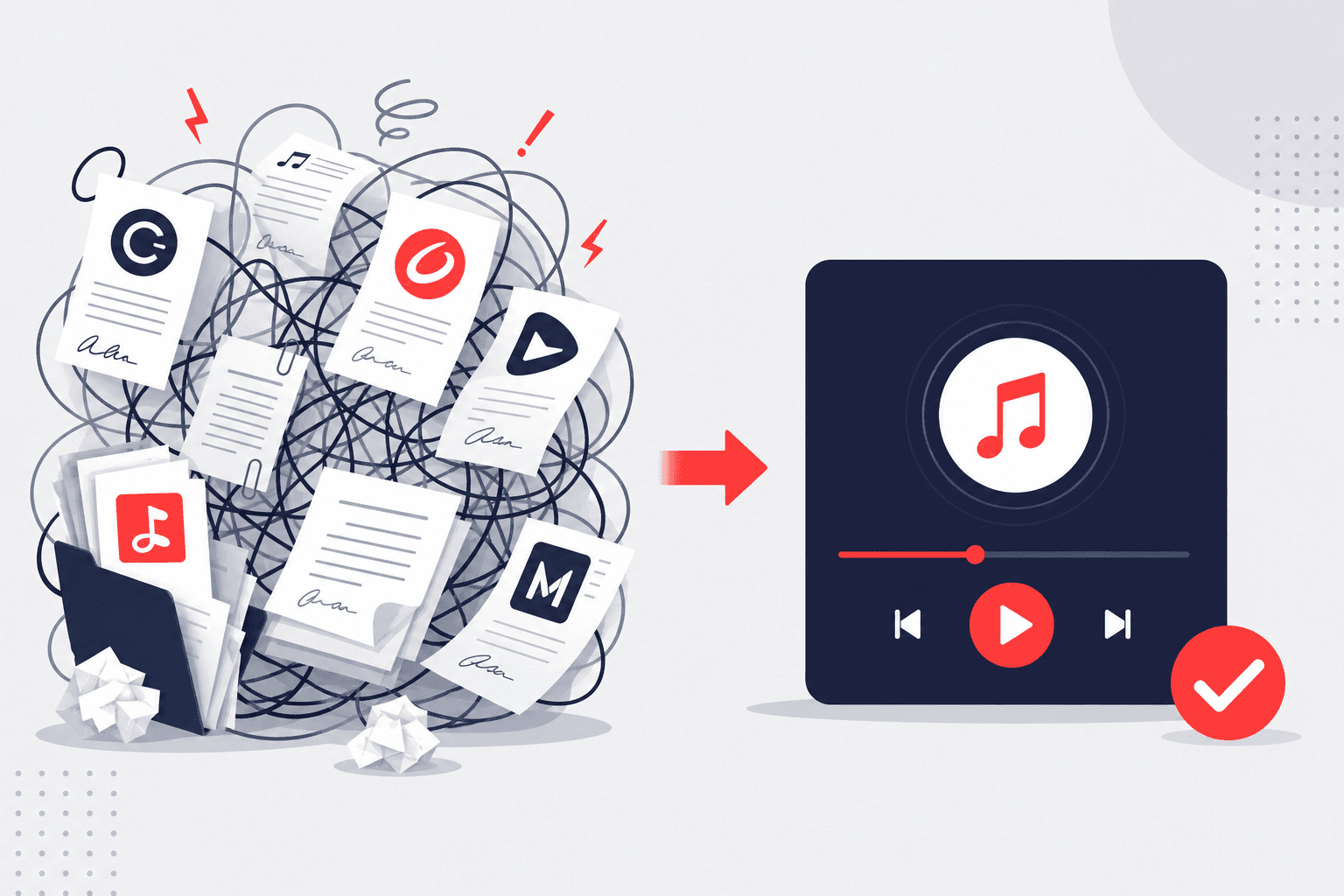
Path A: Pay multiple collecting societies + a music service = thousands per year + paperwork + contracts + renewals.
Path B: Subscribe to 4Play = one low monthly fee + professional music + full license + zero headaches.
Want to understand the difference between traditional licensing and direct licensing in depth? Read our complete guide: Royalty-Free Music — The Myth Busted.
Ready to try?
No credit card, no commitment - just professional music for your business